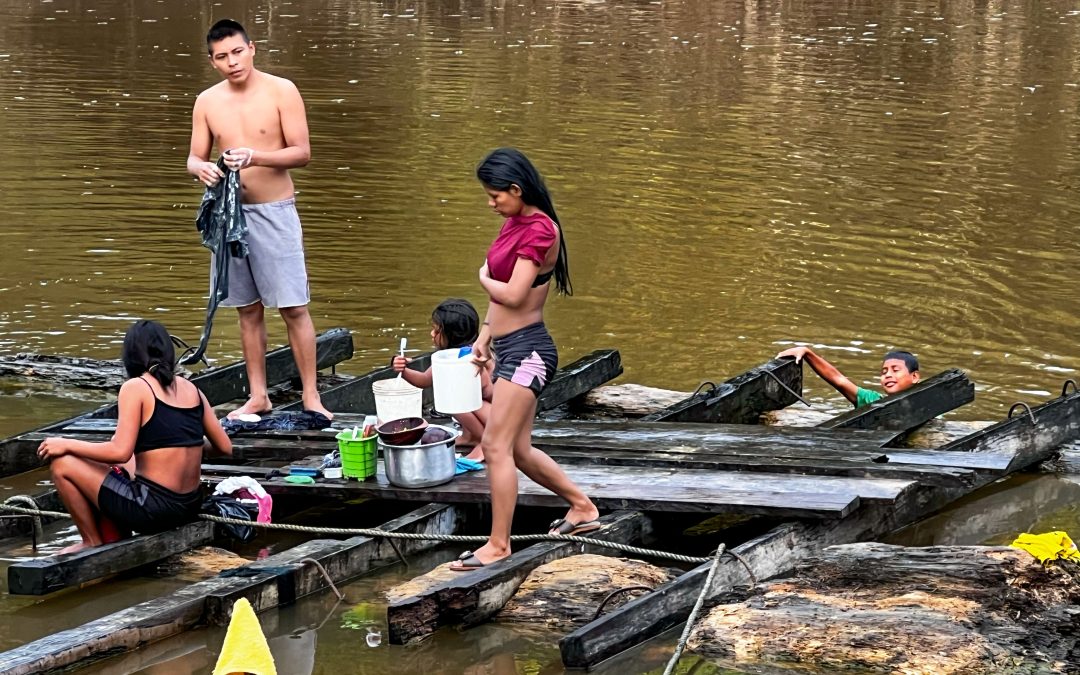
As our boatsman swung wide right and throttled his motor down at the San Martín de Amacayacu landing, a quote from the renowned anthropologist, ethnobotanist, and expert on all things Colombian Amazon Wade Davis echoed in my mind: “For me, the journey we’re about to embark on has been written on a map of dreams.”
When we stepped out of our small voadeira watercraft and onto the mudbank at San Martín, we weren’t just in the Amazon, as we had been the day before in the Tres Fronteras cities of Leticia, Santa Rosa, and Tabatinga.
We were in the jungle, in the world’s most magnificent rainforest.
The village of some 700 Ticuna Indians is located 85% of the way up the Great River’s 1,800-mile course from its mouth at Belem, Brazil, to its juncture with the Marańon and Ucayali Rivers in Peru.
San Martín has neither roads nor vehicles. In all directions inland, it is surrounded by 1,650 square miles of the Amacayacu Natural National Park. Across the Amazon in Peru, the landscape is a mirror.
We – my daughters Crystal and Jessica and grandkids Raina and Vale and I – were in the jungle, a dream I had started mapping 48 years ago.
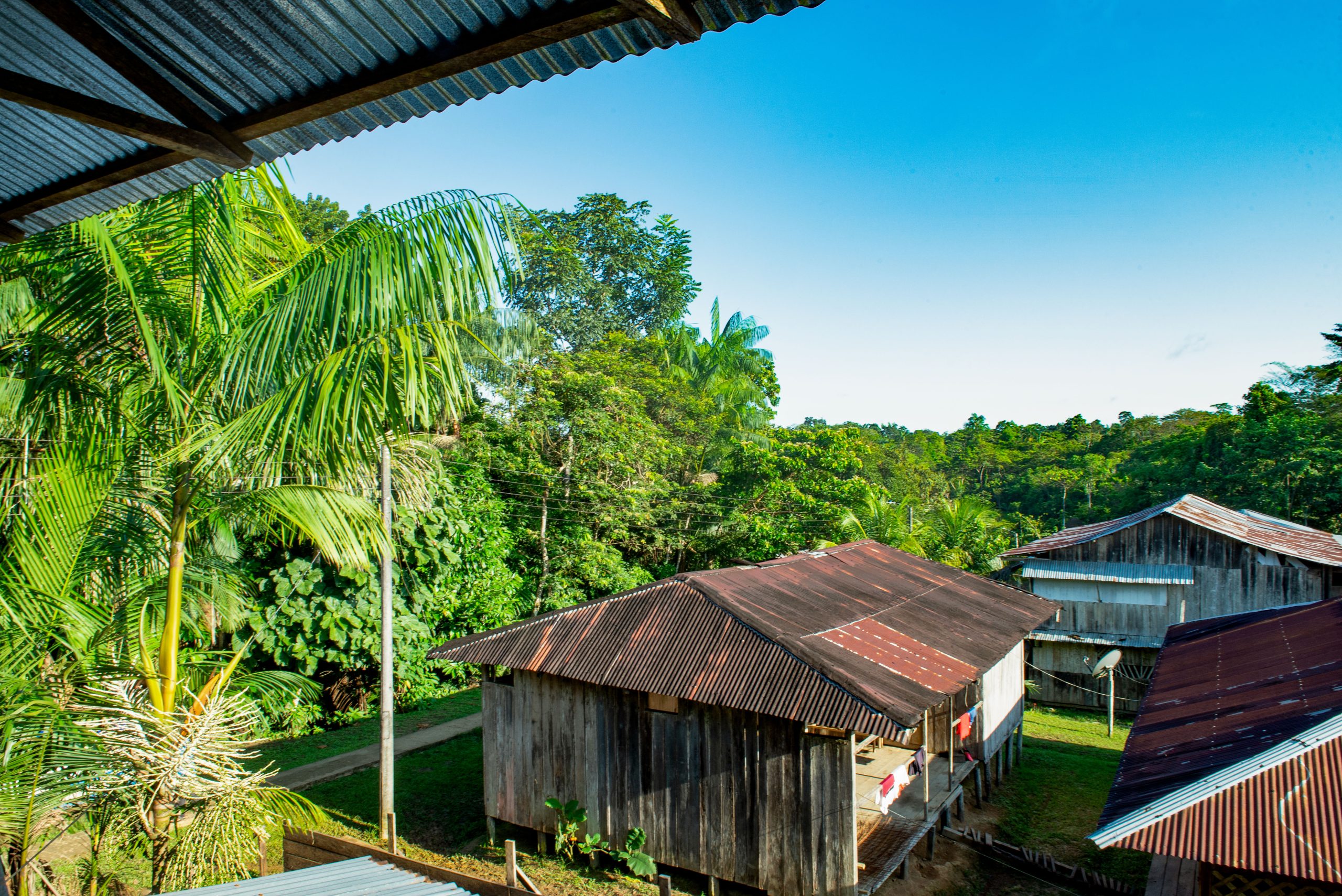
Our destination was Casa Gregorio, an ecolodge that sits along San Martín’s western edge, a few hundred feet from the Amacayacu River. We were two miles north of the Amazon, some 40 miles upriver from our Amazonian touch down in the Colombian port of Leticia.
A highly respected operation in an area where ecotourism is a primary industry, the Casa is owned by Heike and José Gregorio, the former a Dutch biologist who came to the Amazon to conduct research in 2004, fell for the latter, and never left.
The Colombian Amazon from Leticia to Puerto Narińo is dotted with lodges, hotels, bio-hotels, hostels, and ecolodges like Casa Gregorio, all offering guided tours of the rainforest environment. San Martín boasts three others: Ahuma Hospedaje en el Amazonas, Hostal Dasilva en San Martín de Amacayacu, and Amacayacu Lodge.
In addition to providing guides and sharing culture and lodging, Heike and José also operate the nonprofit Small World Foundation to help ensure San Martín’s wellbeing and future.
“The main goal of this foundation is supporting the ancestral land claim of roughly 30,000 hectares of land in the Amacayacu National Park,” the foundation says. “According to the Colombian constitution, this land should also be recognized as Tikuna indigenous land or resguardo. The land claim has been ongoing for the last 15 years and will hopefully come to a positive result soon.”
Colombian Amazon, June 2024
José is a Ticuna, whose people don’t just dominate the tri-border Amazonian area where Colombia, Peru, and Brazil meet; theirs is the most common indigenous language in Brazil, a country with more than 200 such tongues.
Their name, also spelled Tikuna or Tecuna, most likely came from a neighboring tribe’s term for men painted black or black skins. Painting their bodies black with juice from the fruit of the tropical genipapo tree was a common practice in Ticuna history and culture.
The Ticuna people’s cultural longevity through six centuries of war, exploitation, disease, enslavement, and evangelization is an epic tale of human survival.
“Archaeological evidence suggests that their presence in the Amazon basin can be traced back thousands of years,” according to the independent news site Colombia One. “They are believed to be one of the oldest and most enduring indigenous groups in the region.”
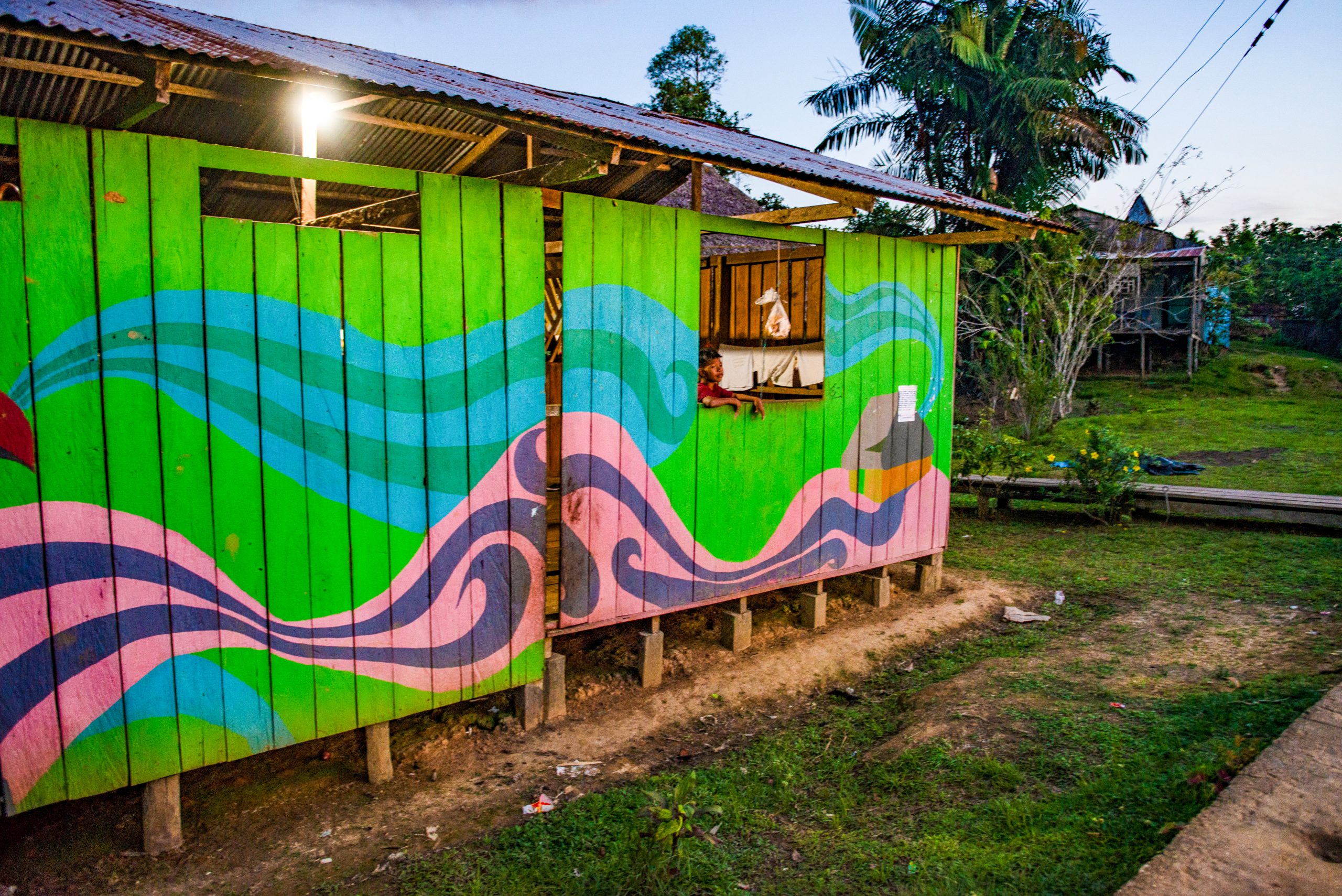
Before the village’s founding in 1972, San Martín’s Ticuna were dispersed over their ancestral lands, where they had lived for centuries in communal houses typical of the Upper Amazon called malocas. For improved access to health care, schools, and church, the government incentivized the village’s formation.
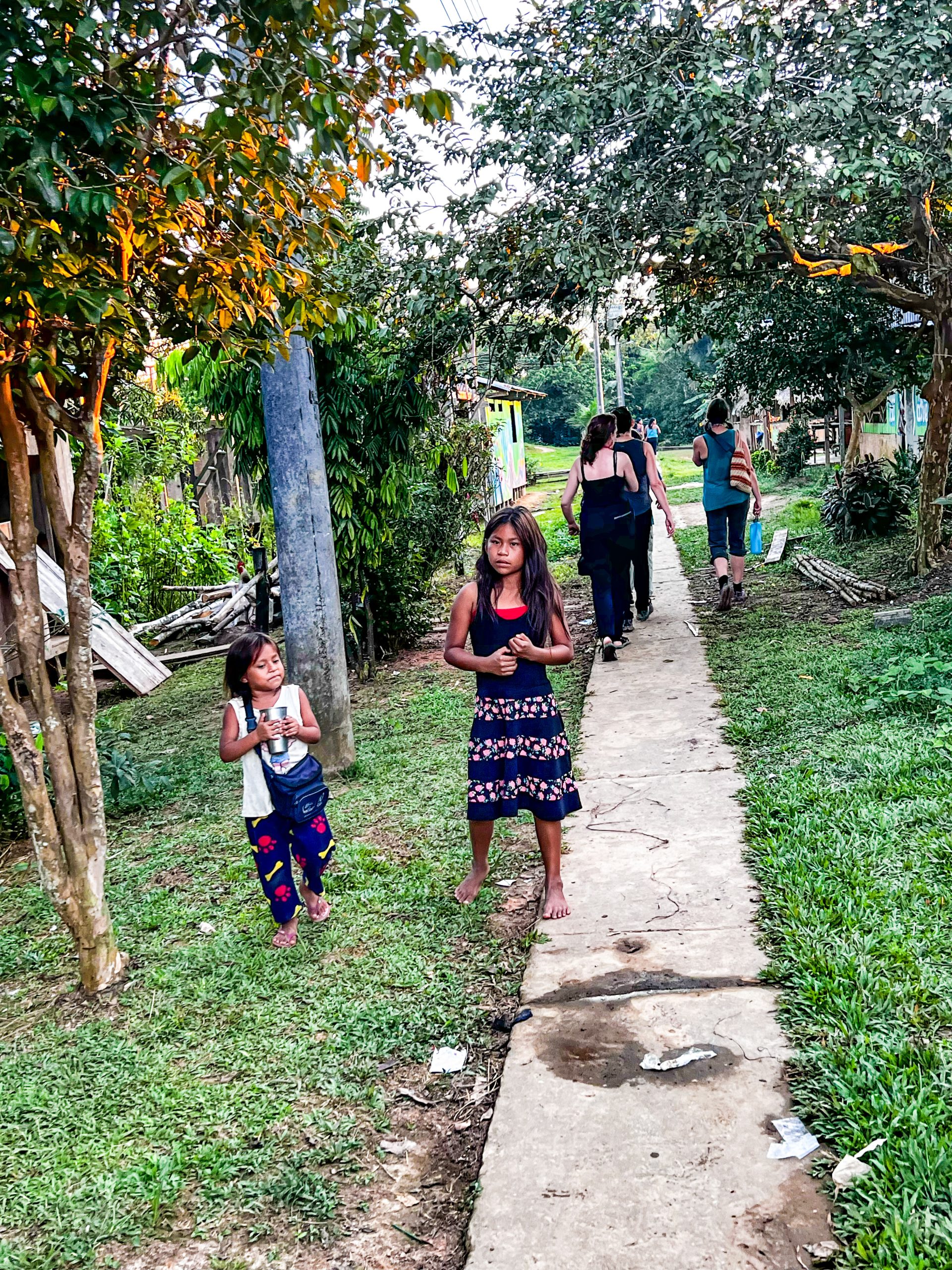
“Today, San Martín de Amacayacu consists of about 120 houses,” Heike and José explain on the Casa Gregorio website. “The people are not only dedicated to agriculture, fishing, and hunting, but also to tourism, education, and other forms of income-generating activities.”
The Ticuna are accomplished artisans, who produce intricate and colorful basketry, beadwork, pottery, and feather headdresses — creations that reflect their cultural and natural inspirations.
Our loop path from Casa Gregorio through the heart of the village, lined with brilliantly painted houses per Ticuna custom, featured the income-generating work of several craftswomen, whose porches double as gift shops featuring necklaces, earrings, bracelets, wood carvings, bags, fans, and assorted items handmade from natural materials .
While we didn’t get to experience them, music and dance are also integral to Ticuna culture, Colombia One said.
“They have a rich musical tradition, featuring vibrant rhythms, traditional instruments, and spellbinding chants that celebrate their heritage, honor their ancestors, and convey their intimate connection to the natural world.”
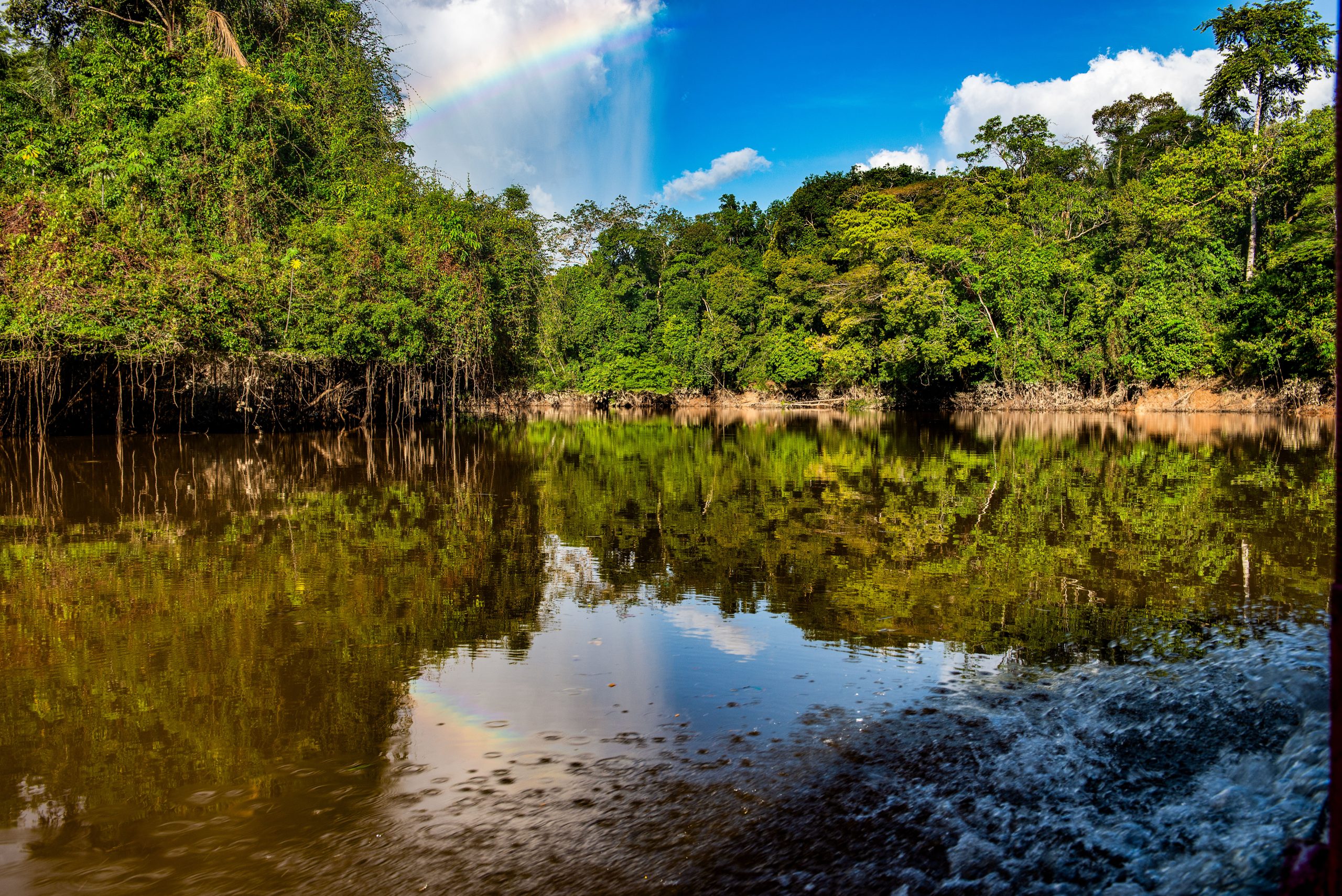
San Martín lies on the southern edge of the Amazon Trapeze, a trapezoidal-shaped landform that lies north and east of the Amazon to the Putumayo River, between the Peruvian border to the west and the Brazilian to the east.
The village is surrounded by the Amacayacu Natural National Park, which was established in 1975 as Colombia’s premier jungle preserve and stretches some 60 miles north, three quarters of the way to the Putamayo.
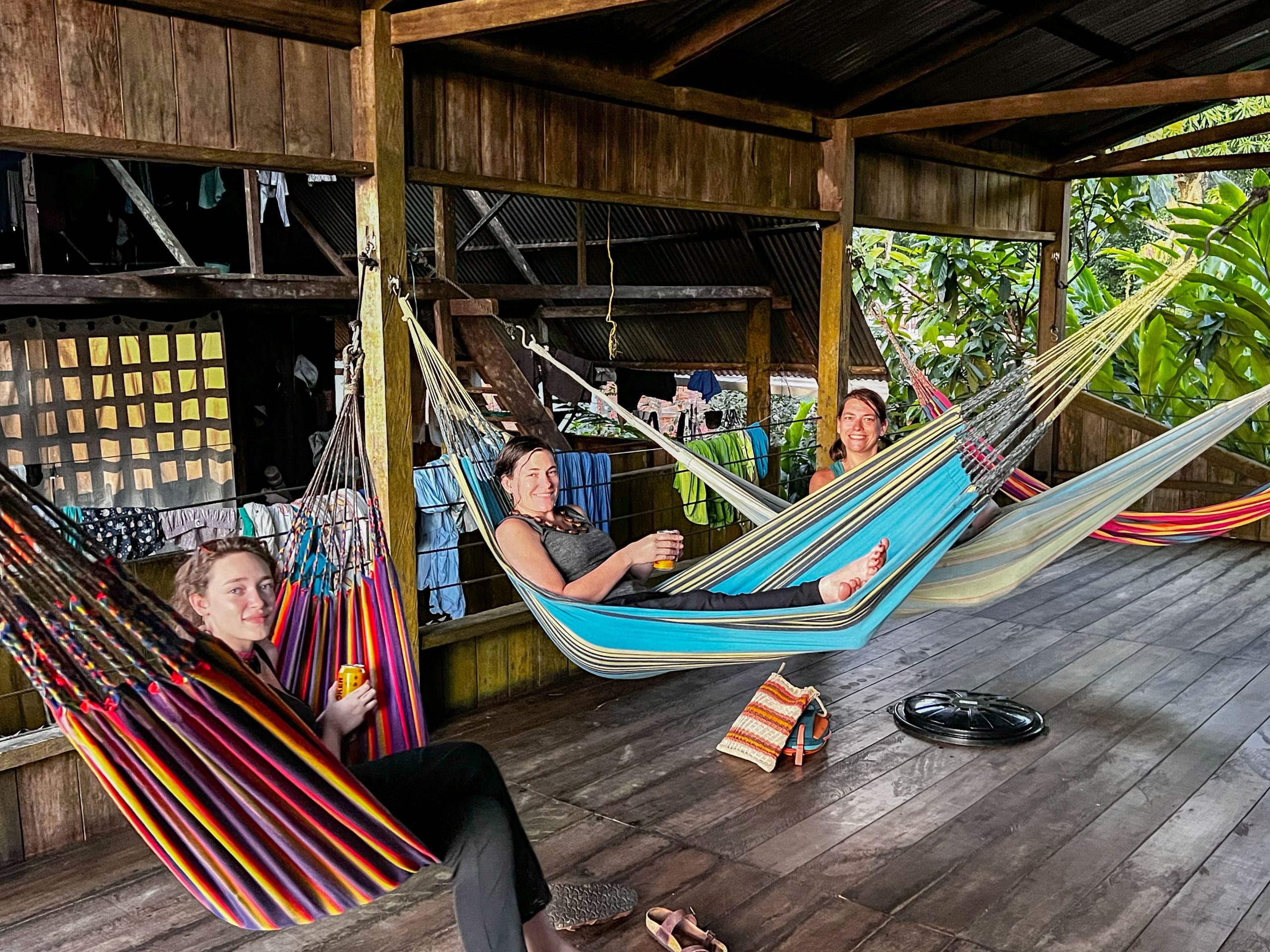
Amacayacu means River of Hammocks in the Ticuna language.
Located in one of the world’s most biodiverse countries, the Amacayacu park’s biological heterogeneity is mind-numbing. According to the preserve’s official website, it supports more than 5,000 plant species, more than a third of the country’s total bird species, and a little less than half of its total mammal species, including the “biggest diversity of primates in the world.”
Amacayacu Natural National Park is quintessential Amazon Basin.
“The park’s landscape is dominated by dense tropical rainforest, with immense biodiversity thriving under its thick canopy,” according to the National Parks Association. “The terrain consists of flooded forests, winding rivers, oxbow lakes, and wetlands, creating a dynamic ecosystem shaped by the ebb and flow of the Amazon River.”
As magnificently detailed in the documentary El Sendero de la Anaconda, Wade Davis’ map of dreams led him to La Pedrera and the Apaporis River in Colombia’s vast Northwest Amazon, roughly 50 miles as the Amazon Kingfisher flies north of the Amacayacu Natural National Park.
My dreams led me to Casa Gregorio on the Amacayacu River, 48 years after charting my first map.
Deep in the Amazon jungle.
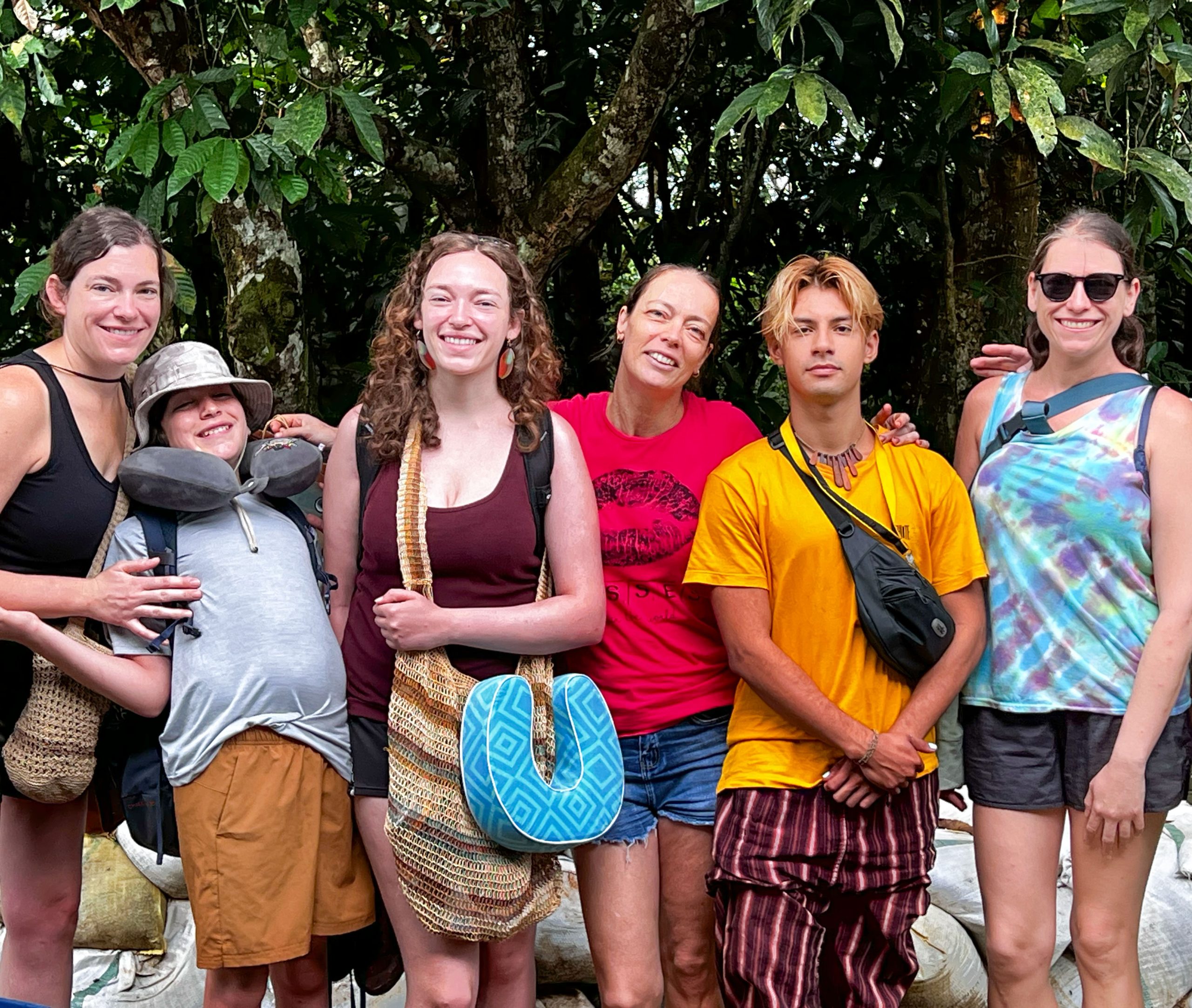
Casa Gregorio, San Martín de Amacayacu, Colombian Amazon