

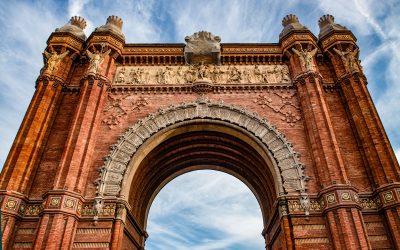
PHOTO ALBUM: Barcelona – Beauty by the Mediterranean Sea, Las Ramblas, Arc de Triompf, Port Vell, La Sagrada Familia
Spending two days exploring Barcelona with Patricia and Luz as my guides to one of the world’s great cities was a magical experience.
It was the only time during my week and a half in Spain that I and the “girls” – whom I hadn’t seen since they were teenagers 46 years prior – spent time alone, and the photo stops couldn’t have been any better.
In the Passeig de Gràcia fashion district, a model heard my camera click from behind on a wide angle shot, copped a pose, and looked at me as we passed as if to say, “Did you get the shot?” Thumbs up.
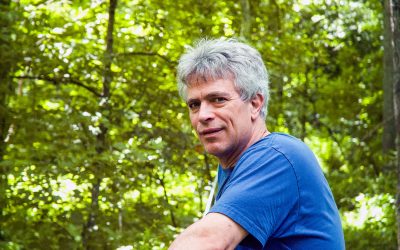
Introducing Jeff Stant: At the Grassroots Forest Forum on the Roadless Rule
As I count the days to my three-quarter-century mark, the life circles grow ever larger. Since August, I wrote a book about one character from the dawn of my professional career in 1985; and I wrote a column about a hike with another.
On Saturday, I will introduce Jeff Stant as the featured speaker at a Grass Roots Forest Forum at the Monroe County Public Library. He will talk about wilderness in Indiana.
I met Jeff in that very building in 1981, after he spoke about wilderness in Indiana and recruited me to be the Upland Group Sierra Club’s newsletter editor – my maiden journalistic experience.
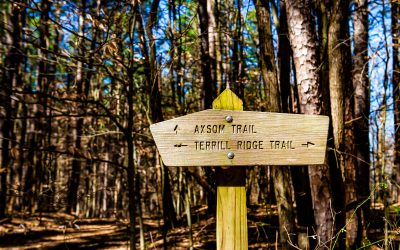
PHOTO ARCHIVE: Charles C. Deam Wilderness — Terrill Ridge Trail, 2016, 2026
A hike with Teena Ligman through the pioneer history of the Charles C. Deam Wilderness for an upcoming Revisiting the Deam Limestone Post piece served as a gateway into my photo past, inspiring this Photo Archive of images from Terrill Ridge captured 10 years apart, in March 2016 and March 2026.
The Limestone piece has a working title of Roscoe Hayes and Other Human Legends from the Indiana Wilderness and includes the tale of an old man who lived in a tree. In the story, we walk and talk about life in the Charles C. Deam Wilderness from 1826 until nature proved it was untamable a century later.
I last photographed the Terrill Cemetery, which I last photographed exactly 10 years ago.
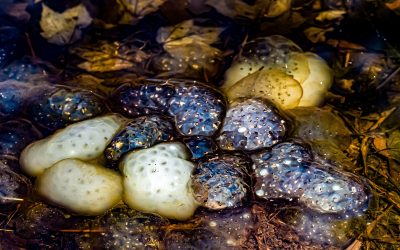
PHOTO ALBUM: Deam Wilderness — Terrill Ridge Trail
The Terrill Ridge Trail offers a perfect microcosm of the Charles C. Deam Wilderness’s human history.
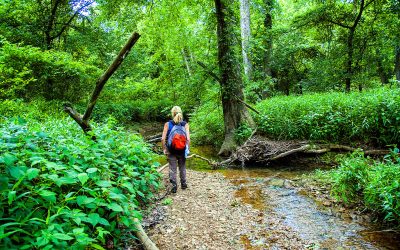
Within its four-mile, in-and-out trek lie examples of the landscape’s century-plus relations with humankind: a pioneer homesite and family cemetery, a fire tower, and a wildlife pond originally constructed a half century or so ago to support the reintroduction of wildlife.
I walked to the pond – somehow missed the cemetery – for some reconnaissance before an upcoming Limestone Post Revisiting the Deam piece with Teena Ligman to discuss the very subject. Teena was the U.S. Forest Service’s public information officer as far back as my newspaper days in the late 80s and early 90s.
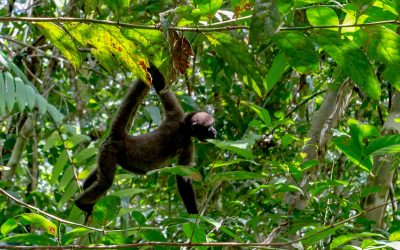
PHOTO ALBUM: Maikuchiga Monkey Sanctuary, Mocagua, Colombia, Upper Amazon River
When we emerged in Mocagua from our hike to the Maikuchiga Monkey Sanctuary, our Casa Gregorio guide Stan told my daughters I looked like I was made of water.
It had indeed been a hot, humid, and sweaty trek through the Colombian jungle to the rehabilitation and reintroduction center for Amazonian monkeys rescued from domestication and illegal trafficking. To protect my septuagenarian, Irish skin from the equatorial sunrays, I kept every inch of my body covered with modern outdoor fabric, hence the liquid appearance post-hike.
I hadn’t noticed the perspiration, as I had hiked as deep in the jungle as i would ever be. And the monkeys, mostly juvenile, were among the most gracious posers I’ve ever encountered.
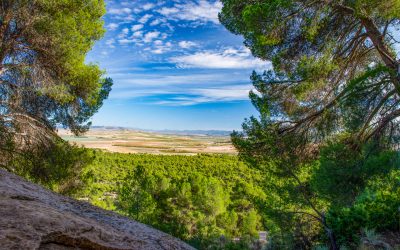
PHOTO ALBUM: Monte Arabí, UNESCO World Cultural Site, Yecla, Spain
While Yecla, Spain, is known for its Monastrell wine, it will always be the home of Monte Arabí to me, in addition to the town’s status as home to two of the three Colombian expatriate Martinez girls, of course.
Looming some 3,500 feet above the Mediterranean Sea 50 miles to the southeast, Monte Arabí is a UNESCO World Cultural Site, so designated for a series of petroglyphs in rock shelters that date to between 2,000 and 6,000 BCE.
The limestone mountain’s geological features include cup-shaped rock formations, rugged hollows, detached and broken cliffs, cavities, caves, shelters, and gentle hills.
BACK TO THE DEAM WILDERNESS: Unexpected Light on the Charles C. Deam Wilderness, Human History
The luminescent yellow daffodil blooms scattered along the roadside were the first indications that a higher spirit was on call during a Saturday morning drive through the Charles C. Deam Wilderness.
Given the season and forecast, the mission was simple and unassuming: get out of the house and into the woods and, in the process, find out if the Road Closed Ahead sign on Tower Ridge Road just past the Blackwell Horse Camp was for real. The implications were considerable if it were.
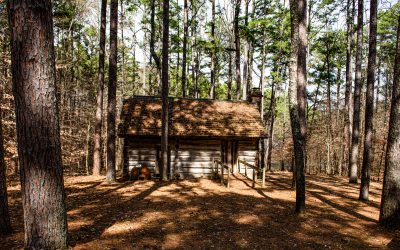
I planned to drive as far as I could across the forested razorback that Tower Ridge is, stop by the historic Brooks Cabin, and, hopefully, maybe, capture a decent image or two in spite of the overhead gray.
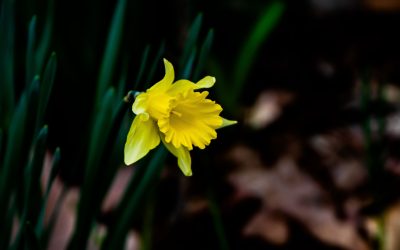
PHOTO ALBUM: Deam Wilderness — Brooks Cabin, Tower Ridge Road, Todd Cemetery, Terrill Ridge Trail
I should have known better than to venture to the Charles C. Deam Wilderness with lowered expectations.
The mission for this drive for pleasure across the forested razorback called Tower Ridge Road was to discover if the Road Closed Ahead sign just past the Blackwell Horse Camp was for real. I had minimal presumptions for sun, color, or photography.
The road was open to the Terrill Ridge Trailhead, and luminescent yellow daffodil blooms on the roadside provided the first hints of the color and light to come in a round-trip drive to Terrill, with stops at the Brooks Cabin and pioneer Todd Cemetery.
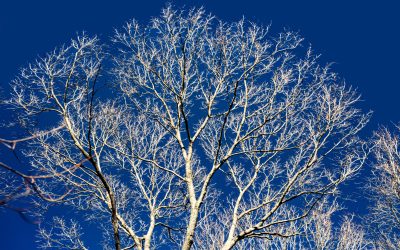
PHOTO ALBUM: In search of the Hoosier National Forest’s Miller Ridge Old Growth
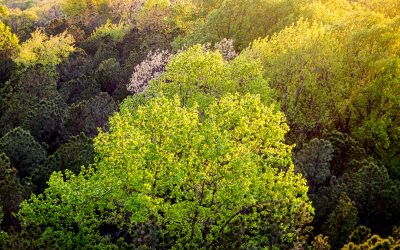
Miller Ridge looms some 300 feet above the Panther Creek Hollow and is home to a stand of old-growth hardwood upland forest that is rare but does exist deep in the Hoosier National Forest.
Jeff Stant knows the stand and will lead me there soon for the next installment of my Revisiting the Deam project for the Limestone Post.
Since it has been decades since my last climb up the Tecumseh/Crooked Creek Trail to the ridgetop, and because the sun shone for the first time since, it seems, the Miller old growth had been saplings, Grandson Vale and I took a get-the-lay-of-the-land hike to prep for the day Jeff and I follow suit.
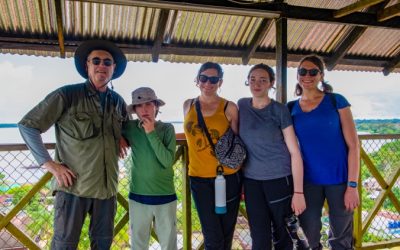
To the Scandinavian Arctic in the Midnight Sun, via Europe and the Upper Amazon River
From the time my daughters were in diapers, Higgs family vacations have always followed my Nikon to the wildest places we could handle, from Sleeping Bear Dunes on the northern shores of Lake Michigan to the Smokey Mountains around Cherokee, N.C.
Now that we’re all grown up, my D600 and I led them and my two grandkids in 2023 to the Upper Amazon River, which is literally the world’s wildest landscape at the center of the Earth.
In May, we’re venturing to the far northern end of the planet to explore the vast wilderness known as Lapland between Rovaniemi, Finland, and Alta, Norway, where I will capture – and the family will experience – the Arctic Ocean in the Midnight Sun.
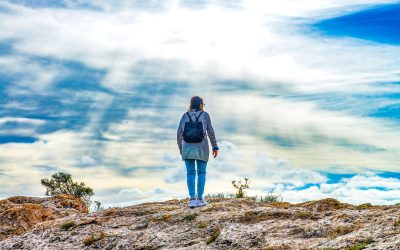
PHOTO ALBUM: Spain – Yecla, Mirador del Santuario del Castillo, Paso de la Bandera, Basílica de la Purísima Concepción
Before I learned my Colombian friends Patricia and sister Luz lived in Yecla, Spain, I had never heard of the place.
The town of some 35,000 sits in the Southeast of Spain, in the heart of the region’s olive, almond, and wine country. Arid climate, sandy soil.
For a scenic jaunt, Patricia and Luz’s husband Juan led me to Photo Stops above and southeast of Yecla for panoramic shots from the Santuario del Castillo (Castle Sanctuary) Mirador del Paso de la Bandera (Flag Path Viewpoint) and other miradors.
In-town stops included the magnificent Basílica de la Purísima Concepción (Basilica of the Immaculate Conception).
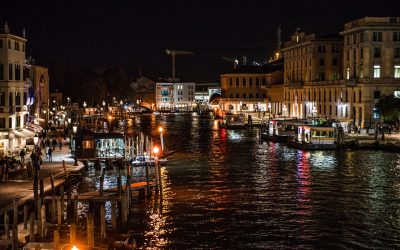
PHOTO ALBUM: Italy – Venice and Venice Only
In what seems like many lives ago, I spent three days exploring Venice, two with my friends Estella and Thomas and one solo.
Part of my Retirement Travel Trifecta project, Venice’s 118 islands connected by canals and bridges marked our last experience with my now-Austrian friends before flying south to Yecla, Spain, where I would spend a week-and-a-half with Estella’s sisters Luz and Patricia.
We stayed in an apartment right off the Grand Canal, by the Ponte dell ‘Accademia bridge, literally the perfect location from which to follow the alleyways and canals in every direction, on foot, via ferry, and, of course, by gondola. Stops included the Rialto Bridge and Bellinis at Harry’s Bar.
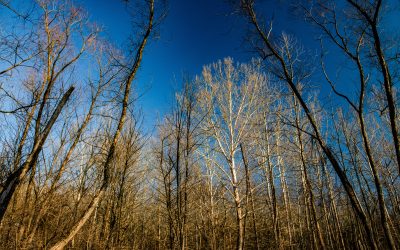
PHOTO ALBUM: Deam Wilderness – Panther Creek Hollow, Crooked Creek
The Panther Creek Hollow and Crooked Creek area of the Hoosier National Forest has become the first photo stop on the Revisiting the Charles C. Deam Wilderness: A Half Century Later project.
Located in a remote section of world-famous Brown County, Indiana, the Panther and Crooked Creeks meet and drain the densely forested, surrounding hills a half mile north of the Middle Fork of the Salt Creek, which feeds Lake Monroe, the state’s largest lake.
Under legislation pending in Congress, Panther Creek would become part of the 12,953-acre Deam Wilderness.
This photo album will be updated from time to time as the project continues.
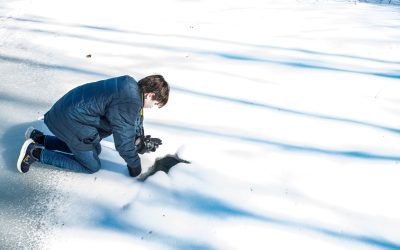
BACK TO THE DEAM WILDERNESS: Revisiting the Deam Wilderness: A Hike to Panther Creek Hollow
I chose Panther Creek Hollow for the initial steps into this new Limestone Post series on my return to the Deam Wilderness and surrounding Hoosier National Forest backcountry for reasons beyond its unparalleled wildness.
Running east from its confluence with Crooked Creek below Miller Ridge in Southwest Brown County, feeding the Middle Fork of the Salt Creek less than a half mile downstream, Panther is indeed as deeply remote as anywhere in the Lower Midwest.
Its watershed is covered by deciduous hardwood forest that’s as old growth as forest gets in Indiana. It’s one of my favorite places on the globe, with a photographic history that dates back four decades.
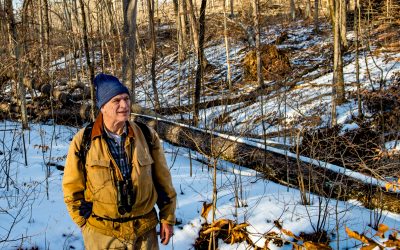
PHOTO ALBUM: Bushwhacking the Deam Wilderness with Jeff Stant – Mt. Carmel Fault, Almost
Jeff Stant and I took the first steps on our new book project on the Charles C. Deam Wilderness by bushwhacking across a foot-deep snow accumulation between the Blackwell Horse Camp and the Mt. Carmel Fault, a geological formation that runs some 50 miles through four Southern Indiana counties and the Deam’s western end.
Due to a late start and a rapidly sinking sun, we reached the fault but turned back before descending to a valley full of waterfalls, which had been the goal.
We will get an earlier start next time.
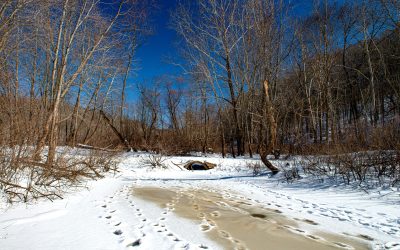
BACK TO THE DEAM WILDERNESS: First Steps — Panther Creek Hollow, Almost
I can’t say the nascent shuffles toward the first installment of our Limestone Post Revisiting the Deam Wilderness series unfolded as planned.
I decided that Panther Creek Hollow is the first target for this nostalgic wilderness exploration and that Grandson Vale would be my inaugural hiking companion. In the wake of a foot of hill-country snow and a week of below freezing temps, we drove to the Crooked Creek Ramp on the Middle Fork of the Salt Creek to take some deep-winter pictures.
NEWS ARTICLE: Deam Wilderness: Midwest’s Largest Block of Undisturbed Forest Targeted for Enhanced Protection
Forest preservationists in the nation’s Heartland are again pushing Congress to nearly triple the size of a Southern Indiana wildland complex in the Hoosier National Forest, guardedly hopeful it will pass this session after narrowing failing in the last.
The Benjamin Harrison National Recreation Area and Wilderness Establishment Act would more than double the Hoosier’s Charles C. Deam Wilderness to 28,253 acres and add a 29,382-acre buffer, where use would be restricted primarily to backcountry recreation such as hiking, horseback riding, mountain biking, mushroom gathering, hunting, birdwatching, nature photography, solitude, etc.
Introduced in the Senate in 2023 and 2024 by then Republican U.S. Senator and now Indiana Governor Mike Braun, and in the House in 2024 by Ninth District Republican Representative Erin Houchin, the bill died in the lame duck days of the 118th session as part of a package of public lands bills torpedoed by House Republican leadership.
PROJECT: Back to the Charles C. Deam Wilderness: A Half Century Later
After a week buried under a foot of snow and a meeting with friends at the Limestone Post, it seems I am still taking to heart the most profound quote I’ve elicited from anyone in my 50-year career as a journalist, photographer, and author:
“Every second is an opportunity for extraordinary depth and fulfillment of purpose.” – Andy Mahler
I will be returning to my roots in 2026, hiking through and photographing the Charles C. Deam Wilderness for a series of Limestone features, as well as an Andy-style coffee table book on Jeff Stant and the largest block of unbroken hardwood forest in the Lower Midwest.
Nearly every second that I have for purpose and fulfillment this year will be devoted to help make happen what Jeff Stant and I know is a once-in-a-lifetime.
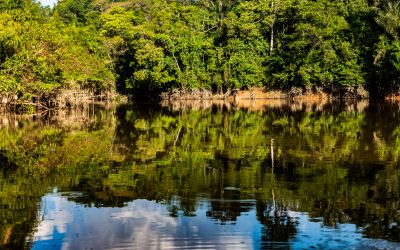
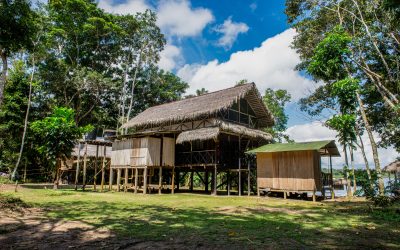
Up the Upper Amazon River: San Martín de Amacayacu, Ticuna Indians, and Colombia’s Amacayacu Natural National Park
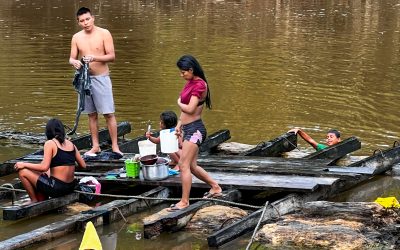
As our boatsman swung wide right and throttled his motor down at the San Martín de Amacayacu landing, a quote from the renowned anthropologist, ethnobotanist, and expert on all things Colombian Amazon Wade Davis echoed in my mind: “For me, the journey we’re about to embark on has been written on a map of dreams.”
When we stepped out of our dugout wooden vessel and onto the mudbank at San Martín, we weren’t just in the Amazon, as we had been the day before in the Tres Fronteras cities of Leticia, Santa Rosa, and Tabatinga.
We were in the jungle, in the world’s most magnificent rainforest.
Remembering Carp Combs
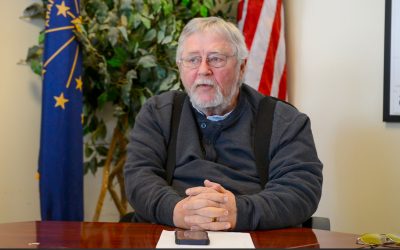
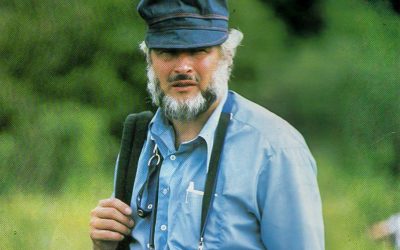
… I’m a man of words as well, and I’ve gotten pretty used to memorializing friends who have passed – Charlotte, James Alexander Thom, even Ken Nunn, who once sent a note calling me an “old friend.” I wrote a book about Andy Mahler and left his bedside just a few hours before he passed.
But when I learned the news on the morning of Jan. 6, all I could muster for our mutual Facebook Friends was:
“Sorry folks. But I just learned that Carp Combs passed this morning. This is a hard one.”
PROJECT: Remembering Bill Thomas: Nature Photographer, Author, and Educator Extraordinaire
As detailed in this four-part series, Bill Thomas is the one individual most responsible for the half century path that led me to Andy Mahler and the Hoosier National and Indiana University acquiring my professional archive — 50 years of my nature images and my Bill Thomas files among them.
Bill served as a mentor, friend, and muse from the moment we met at a camera store in downtown Bloomington in 1979 until I completed my half-century quest to photograph the Amazon in 2024 and am now planning a nature photo adventure to the Scandinavian Arctic in 2026.
Along my journey into the past, I discovered that the Internet has precious little information about a man who, through his writings, photographs, seminars, and presentations on photography and nature touched untold thousands of lives throughout his 75 years on Earth.
To the Amazon River: Plan Colombia, Part 3 — Hilario, Barrio Simon Bolivar, Bucaramanga, Bogotá, High Fashion Leather and Amazon Basketry
I have a trove of memories from the times I spent with Hilario Martinez in Colombia, the most vivid among them his reaction when I relayed news reports in 1975 that said some Americans were eating dog food. We were in a Chinese restaurant in Bogotá, and the image so contradicted Hilario’s preconceived notion of America as the land of plenty that he put his hands over his ears and shook his head “No!” while hunched over his plate slurping a single spaghetti noodle.
For my purposes, Hilario was perfect. I needed someone to handle on-the-ground tasks that an importing business requires in the country of origin – purchasing the products, shepherding them through customs, and shipping them to the states. Most importantly, I needed someone who was honest, as Colombia was notorious as a land of thieves. I traveled with the people, and they were always warning me of the dangers.
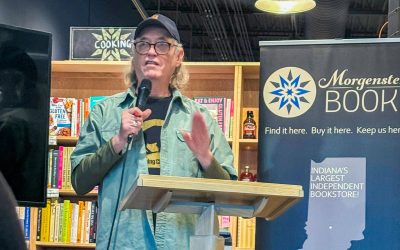
Andy Mahler and the Hoosier National – Project Update, Limited Edition 250
I’ve played the author game enough times to recognize the life cycle of ink on paper in the Digital Age. And, barring a lightning bolt, I’m certain that the coffee table book Andy Mahler and the Hoosier National: The Folk Hero and the Forest He Loves, will be a Limited Edition of 250 copies.
While Andy and I discussed running this project through a nonprofit, we chose to do it ourselves, with the transparency and conscience of a nonprofit, professing social missions from the start.
Here’s a report.
To the Amazon River: Plan Colombia – Part 2, San Jacinto, Barranquilla, B&W Photography
We had learned in Cartegena that artisans wove the wall hangings in a crafts village about a hundred miles south of Barranquilla. Almost a month to the day after I flew to Colombia the first time, Victor and I were on a bus to San Jacinto to pursue my evolving vision of an international cottage industry with a social conscience.
That ride was straight out of Romancing the Stone – ancient, loud, brightly painted buses with Jesus statuettes on the dashboards; stony-eyed locals with bags, boxes, crates, babies, birds, and pigs jamming every cubic inch of the seats and aisles; and drivers who stopped for anyone and anything on the roadside, no matter how packed their vehicles.
We disembarked at a shop called the Almacen La Feria de las Hamacas. With Victor translating, I negotiated with one of the proprietors, while sipping a warm Coca Cola, my beverage of choice in 1974 Colombia. No water was potable for non-natives, not even in the mountains, I would later painfully learn.