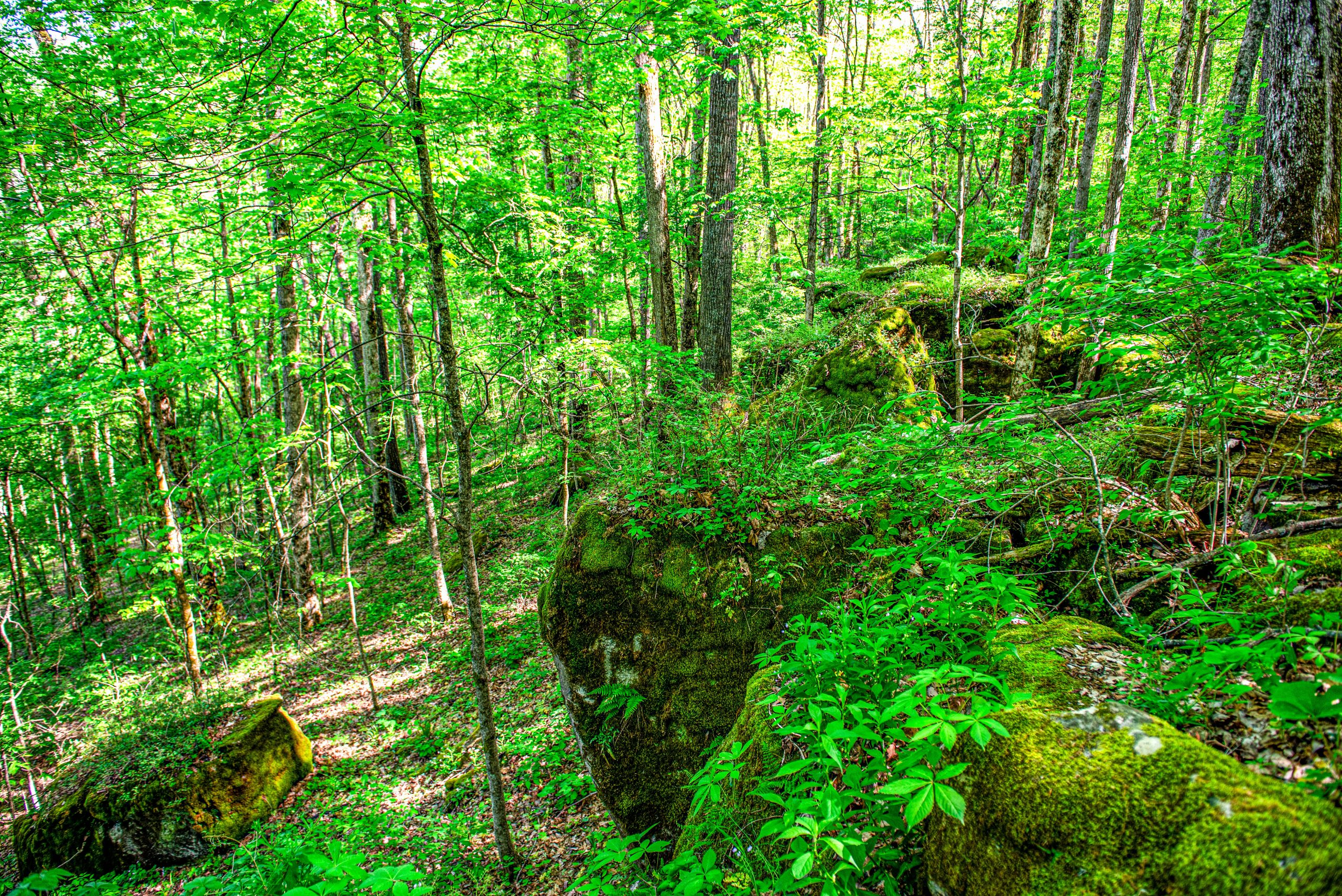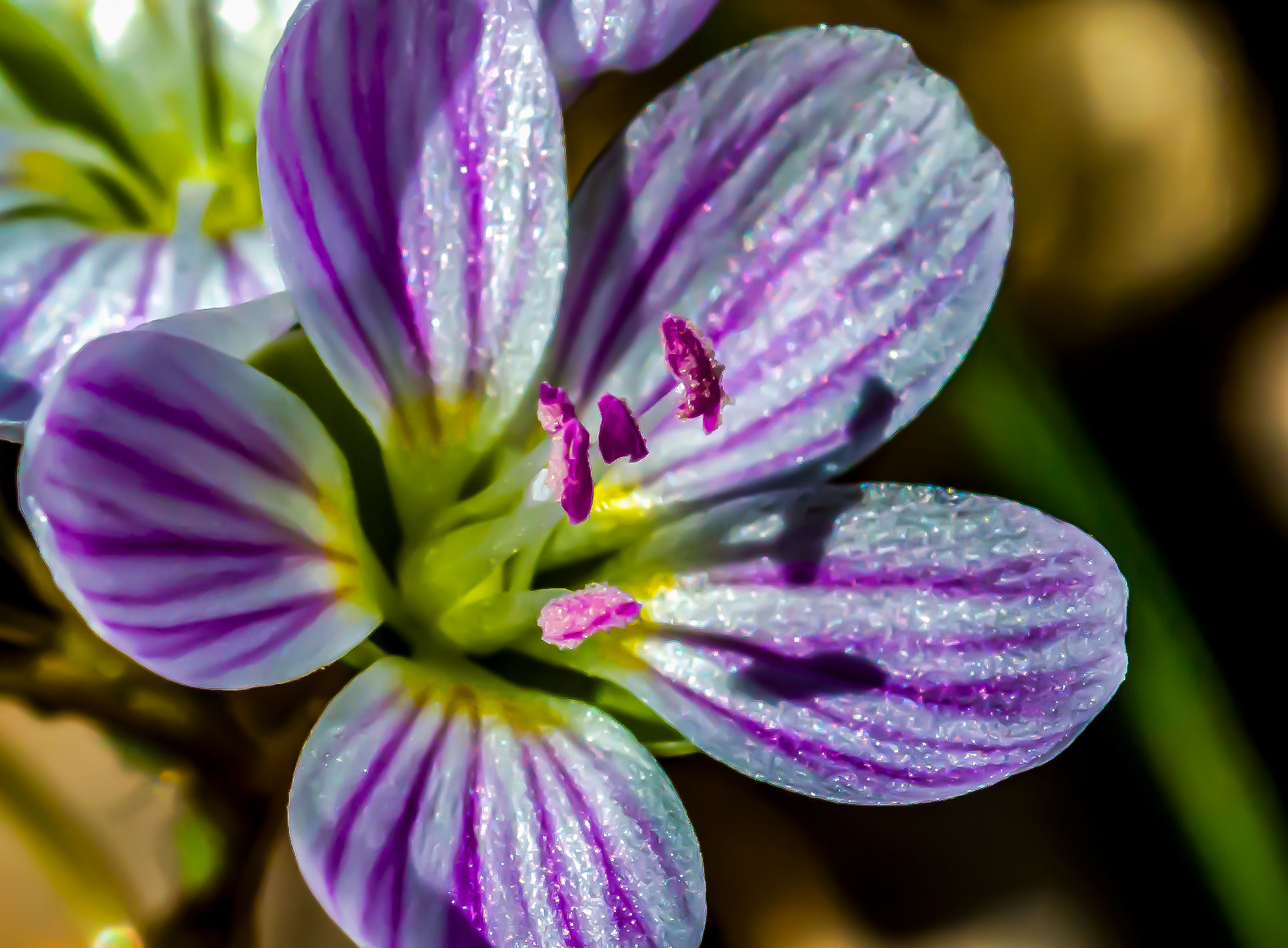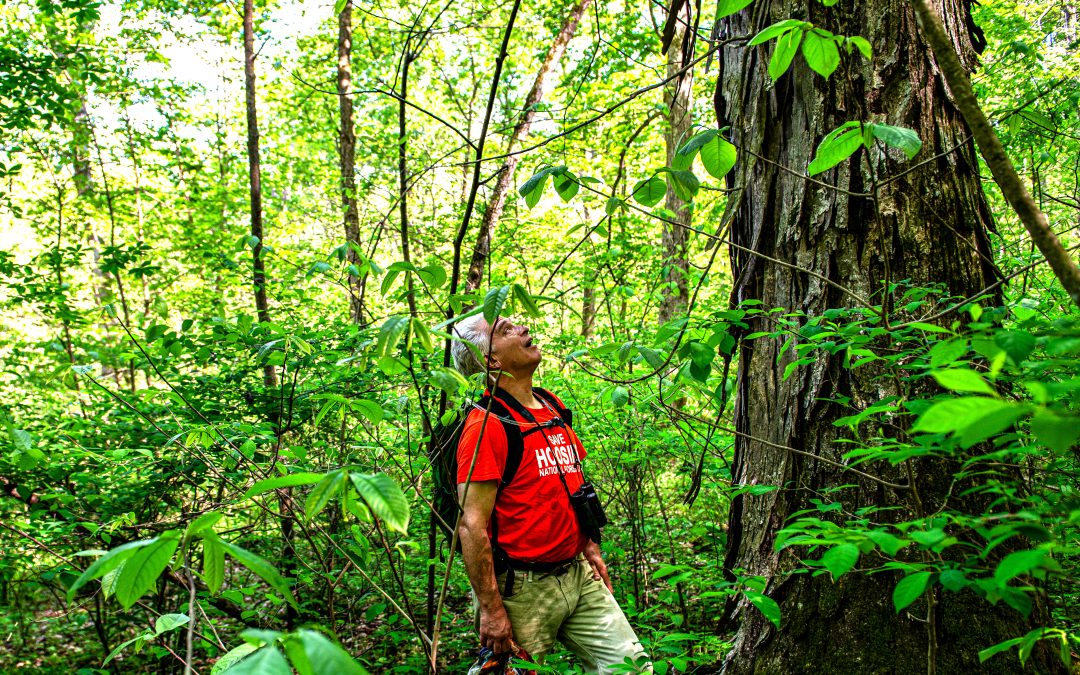
AUTHOR’S NOTE: The following are snippets drawn from a 30-minute conversation with Jeff Stant on a hike through the Charles C. Deam Wilderness to a stand of old-growth hickories, which were as magnificent as he said they would be. This was the second of a series of backcountry treks through which we will share Jeff’s vision of the forest. Next stop: Miller Ridge.
It doesn’t take nine hours of bushwhacking through the Charles C. Deam Wilderness to imbibe Jeff Stant’s passion for the largest, wildest block of hardwood forestland in Indiana and the Lower Midwest.
“There’s nothing like it in Indiana,” he says, while pausing on a downed tree by a Saddle Creek feeder stream on the way to his favorite stand of old-growth hickories. “There’s really nothing like it in Ohio or Illinois. Nothing this large in terms of wild nature.”
But a five-mile, roundtrip trek on the Hayes Trail – with a mile or so bushwhack up Frog Pond Ridge and down through the Saddle Creek Valley – demonstrates that his passion is inspired by an intimate, tactile knowledge of the forest, all of which drive a grandiose vision.
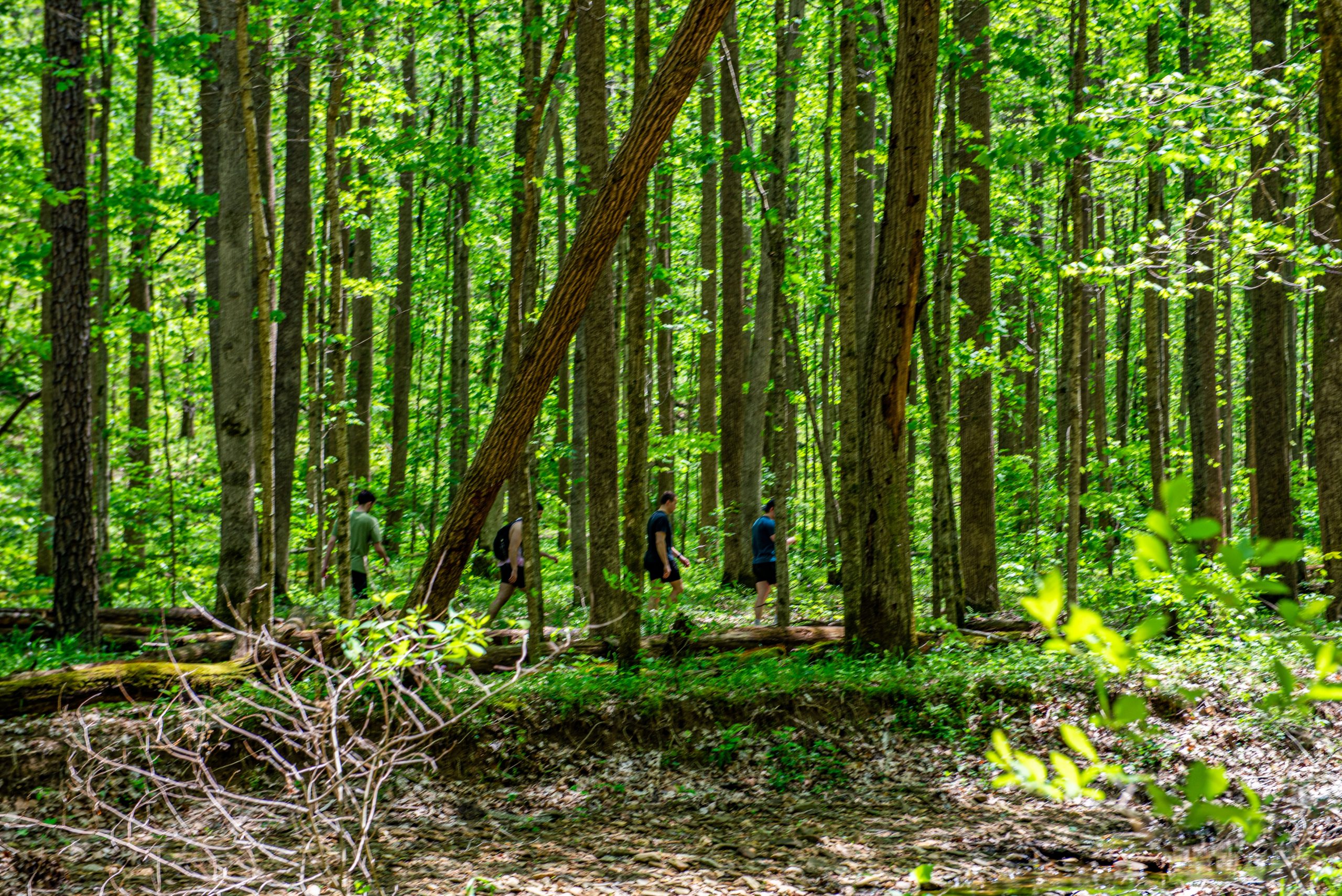
As a single-file line of teenagers from the nearby Ransburg Scout Reservation passes on their way back to the Hayes Trailhead, Jeff explains the Deam’s 12,953 acres constitute the only large block of forest in the Hoosier state that is permanently protected from human impact.
“This forest around us is the only place in Indiana where you have a forest that’s more than 1,000 acres, where the government managers, the foresters, can’t touch it.”
They can’t log, build a road, prescribe a burn, or use herbicides in the Deam Wilderness, he says.
“They can’t use machinery to do anything. They can put in trails. People can camp here. They can experience the forest and its beauty. But nobody can do anything mechanized to it.”
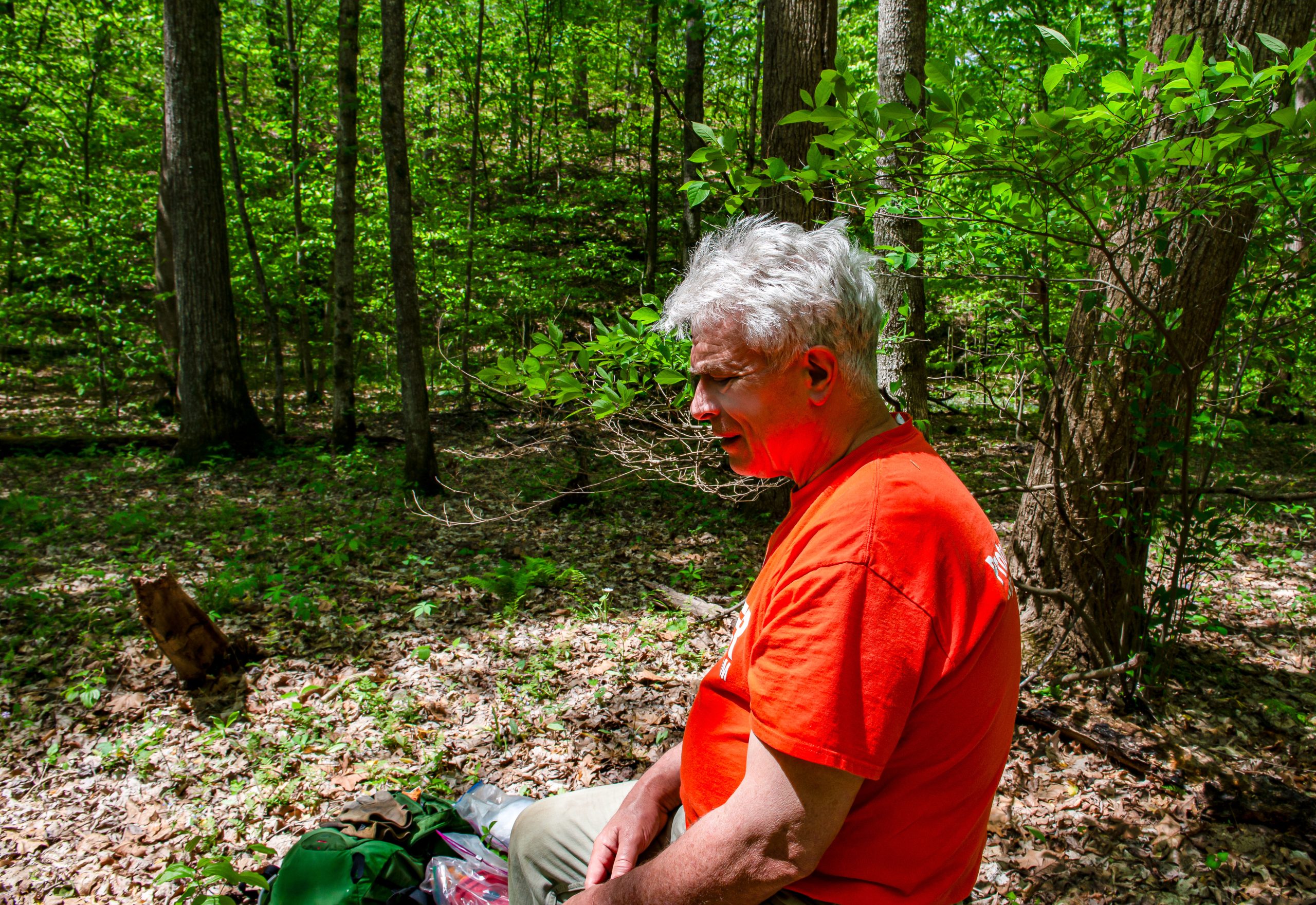
Jeff’s old-growth vision includes the entire Deam Wildlands Complex that he argues should be permanently protected and managed for wilderness, Lake Monroe Watershed protection, and backcountry recreation, like camping, hiking, hunting, mountain biking, and horse riding.
Along the dayhike we encountered Boy Scouts, turkey hunters, four sets of hikers, and two campsites with campfires smoking.
Jeff and forest preservation groups like the Indiana Forest Alliance, where he served as executive director for more than a decade, are lobbying for passage of the Benjamin Harrison National Recreation and Wilderness Establishment Act in Congress, which would do just that on 58,000 acres of the Deam and surrounding Hoosier National Forest.
The bill would expand the Deam to 28,000 acres and add an additional 30,000-acre Harrison National Recreation Area as a buffer. A version gained bipartisan support in the Senate but died in the 2024 lame duck session of the 118th Congress.
.
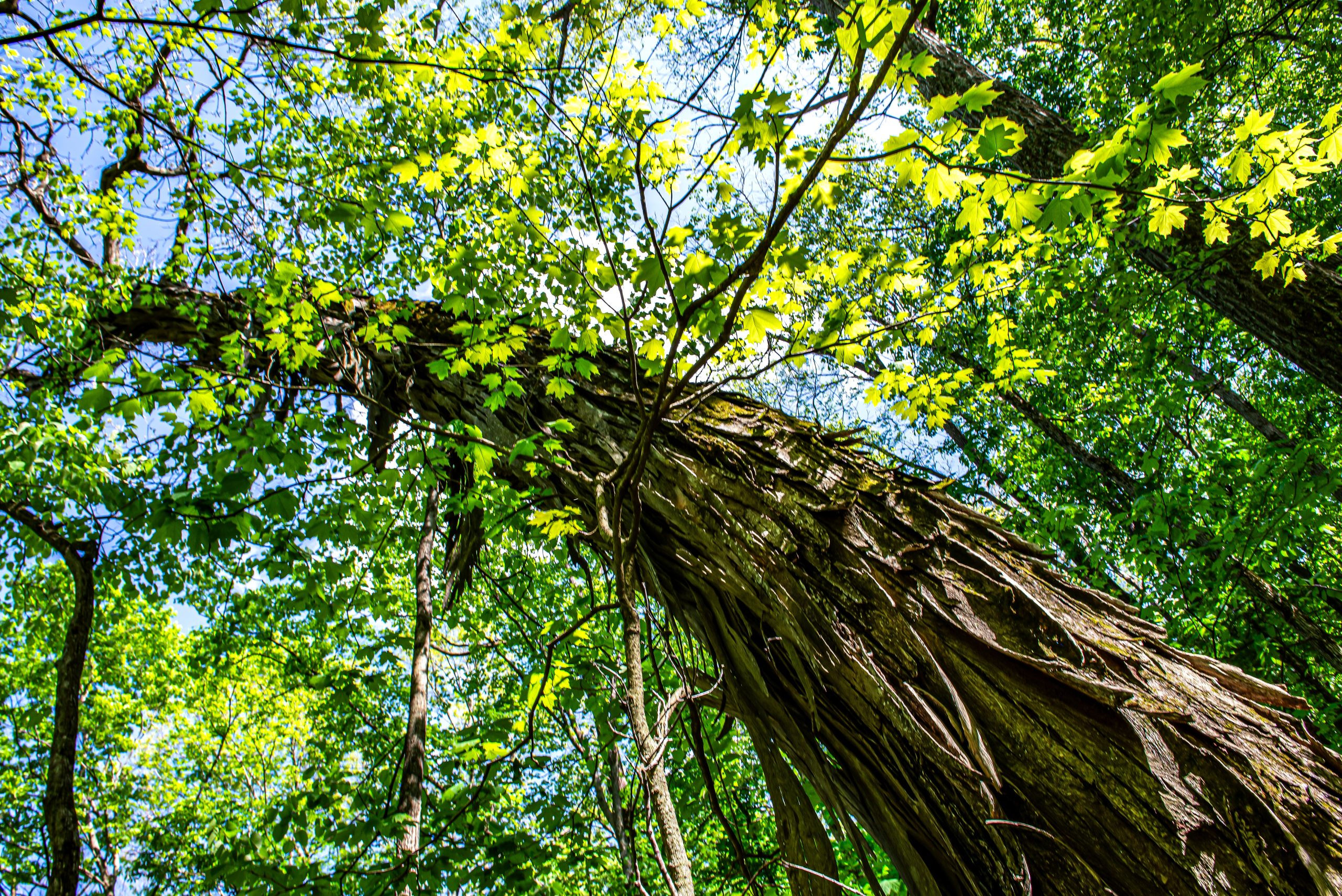
A hardwood forest stand in Indiana is considered old growth if it hasn’t been disturbed by humankind for 80 years and the oldest trees average 150 years or more, Jeff says.
In fact, such conditions exist or are within reach in the broader Deam Wildlands Complex that includes nearby Yellowwood and Morgan-Monroe State Forests, Brown County State Park, and other natural woodlands in the region.
“The forests here in the Deam go on for thousands of acres. It’s the heart of an area where the most dominant thing is just forest.”
Between the Mississippi River and the Pennsylvania mountains, no comparable expanse of native forest exists, he says. There are large swaths of forestland in the South, but much of the native hardwoods have been dozed and replaced over the last 50 years with monoculture pine plantations.
“This is vastly more diverse than that forest,” he says.
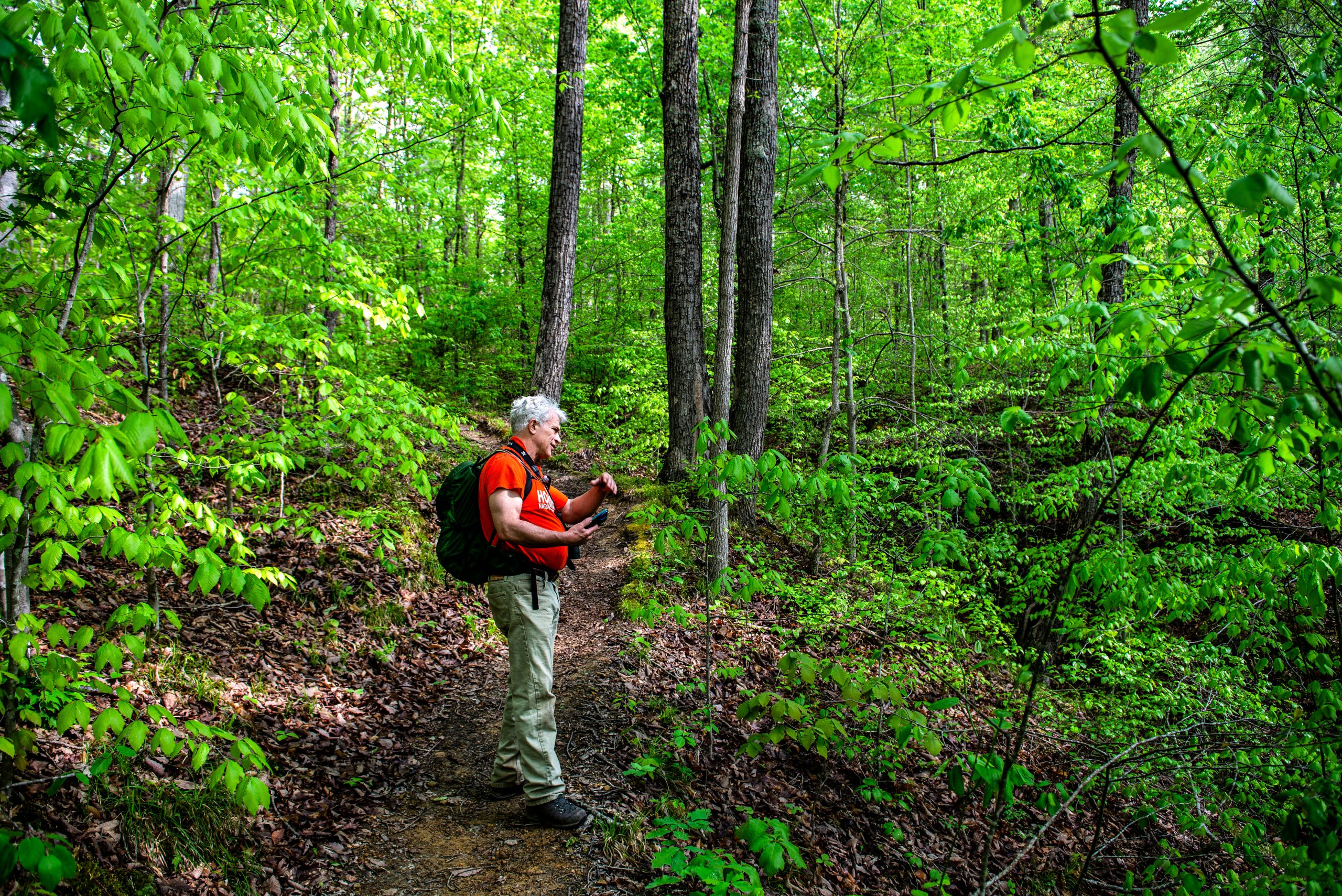
The Deam Wildlands constitute biodiversity’s “zenith state” in Indiana, Jeff says, explaining by that he means the ecosystem’s natural diversity has reached its highest level possible.
“People don’t realize that the biggest storehouses of biodiversity in America are not out on the public lands in the West. They’re here in the moist Midwest and East.”
For example, Indiana’s forests support 45 different native tree species, while the entire State of Washington has only 25 – a state that is twice the size of Indiana and whose elevation ranges from sea level to 14,000 feet.
“So, we have nearly twice as many species of trees in our hardwood forest on an elevation of a few hundred feet as exist in the entire state of Washington,” he says, his arm arcing 180 degrees across the Saddle Creek Valley. “The real storehouses of biodiversity are right here.”
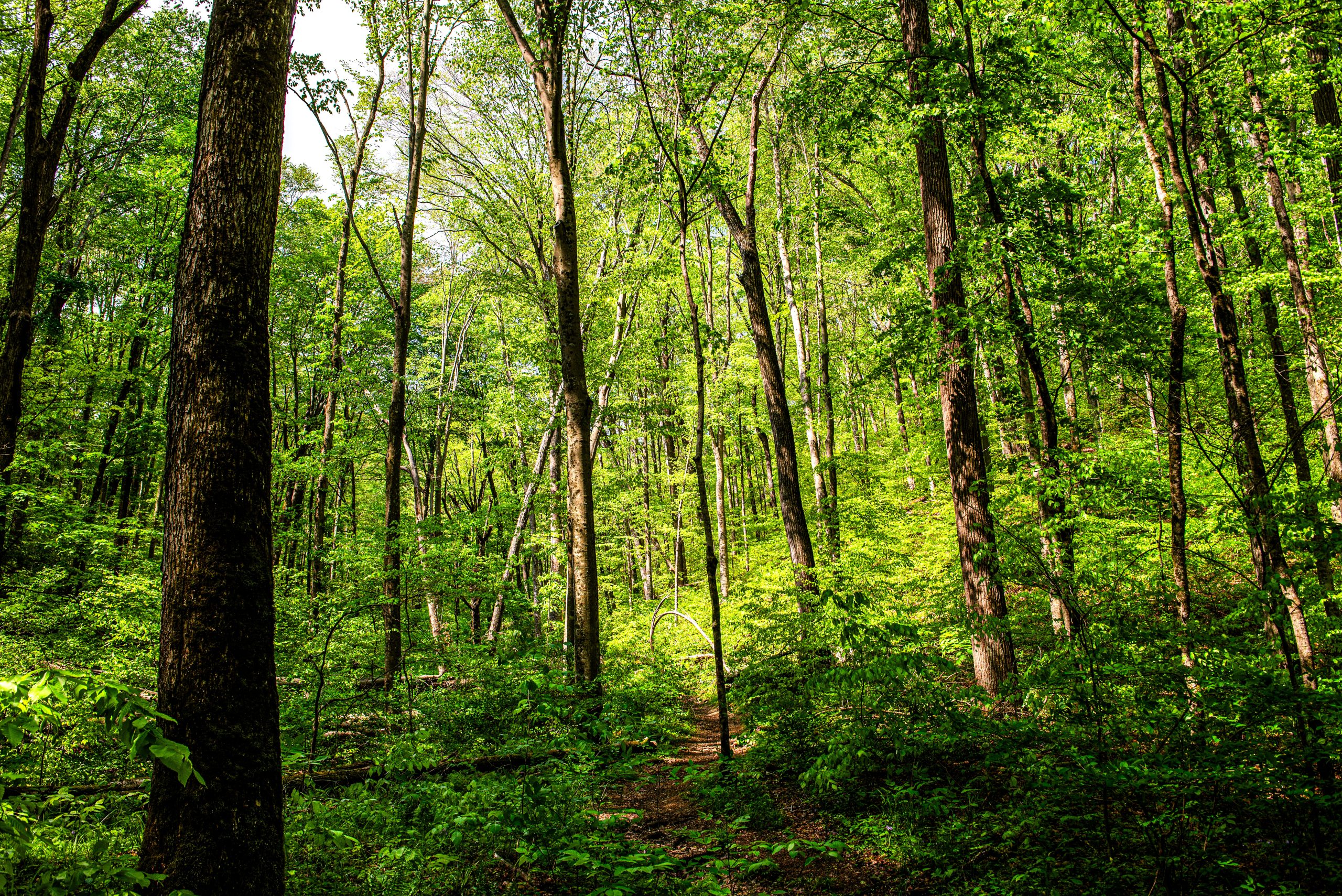
The Deam’s hardwood forest ecosystem is in fact a remnant of what once was the largest temperate forest on the planet when European explorers reached Indiana in the 1600s, Jeff says.
“Nowhere, not in Asia, not in Europe, was there a larger span of deciduous broadleaf tree species forests in the temperate regions of the planet,” he says.
And, in the age of climate change, nowhere else is it possible to allow that old-growth ecosystem to evolve on its own as it had for centuries.
“This is really the only area in Indiana where you can let wild nature just operate without human impact,” he says, “on an area that’s about 90 square miles.”